
Publication
Clinical Investigation of the technology with 15 dialysis patients has been published in the ‘Hemodialysis International’ journal. Please find the link to the article below:
Problem
Filtration is a crucial step in multiple processes across industries. It utilizes a membrane with pores to separate certain specific solutes from the feed solution. However, the output of the filtration process drops significantly during the process due to crowding of solutes near the membrane (a phenomenon known as ‘concentration polarization’.
Solution
Ours is a first-in-the-world, patented device that mounts on the filter and reduces concentration polarization in real-time. It enables improved rate of solute transport across the membrane. The device does not contact the process liquids and is proven to be safe for the membrane and the solutes being filtered.
Use-case: Dialysis
Dialysis is a lifeline for individuals facing renal failure. In this condition, the kidneys struggle to effectively filter waste and excess fluids from the body, posing a significant threat to overall health. During dialysis, the blood of a patient is passed through a dialysis machine consisting of a filter. The membranes of the filter separate harmful solutes from the blood.
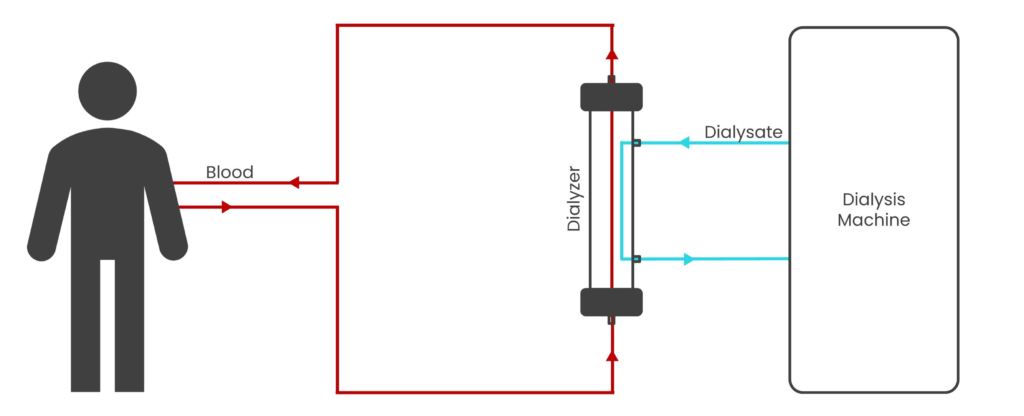
Fig 1: Schematic diagram representing hemodialysis
Long-Standing Oversight
In any filtration process utilizing a membrane, efficiency tends to decline due to the solutes crowding near the membrane. In hemodialysis, blood constituents such as erythrocytes, platelets, plasma proteins and solutes accumulate on the membrane surface, gradually obstructing its pores. As the dialysis session progresses concentration polarization (CP) layers form on the blood side of the membrane.
In high-flux dialyzers, CP visibly affects ultrafiltration as shown in Fig 2. The larger membrane pores facilitate the rapid transfer of plasma water, leading to a rapid rise in protein concentration. As a result, a CP layer forms on the blood-side of the membrane, increasing the oncotic pressure and impeding further ultrafiltration, undermining the purpose of using a high-flux dialyzer.
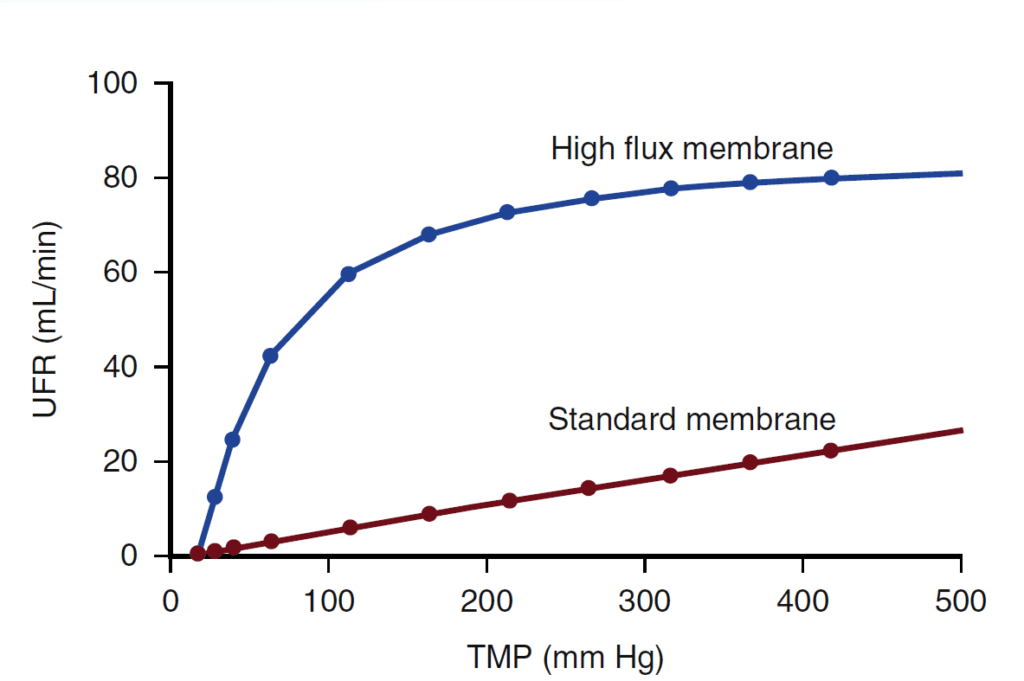
Fig 2: Impact of CP on high flux dialysis [6]
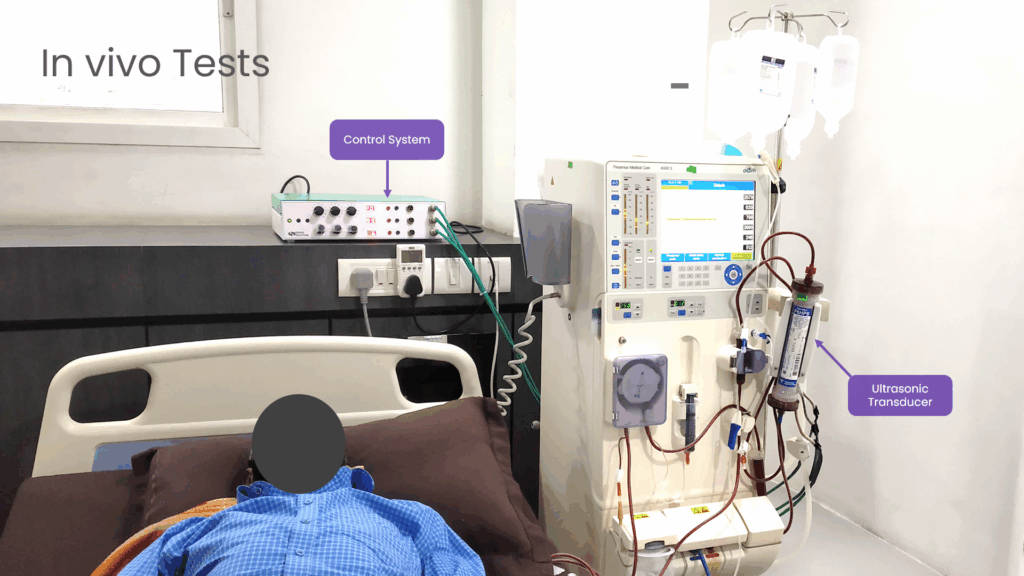
Fig 3: Clinical Investigations of Diaraise in 15 dialysis patients.
Our clinical investigations which involved 15 patients on maintenance hemodialysis, found that CP visibly affected the rate of removal of solutes (known as clearance) as shown in Fig 4. The clearance was being monitored using Online Clearance Monitoring (OCM) of the Fresenius 4008S dialysis machines. A significant reduction in small-solute clearance by up to 27.8% was observed during the four-hour sessions.
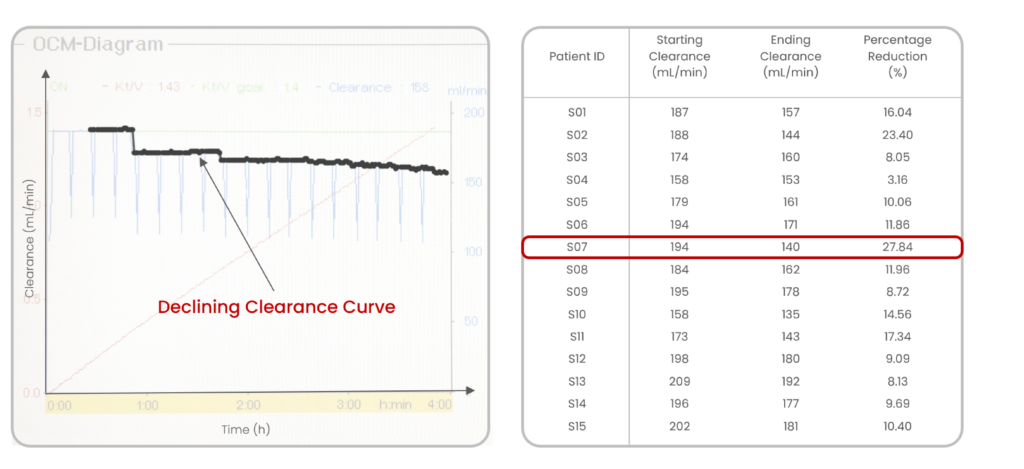
Fig 4: Intra-dialytic reduction of clearance captured by OCM (our results)
The findings parallel those of Morty et al.7, reporting a modest reduction of less than 20% in urea clearance over the course of a three-hour dialysis session. More importantly, their study emphasized a much more substantial reduction in clearance for larger molecules, with dextran experiencing a staggering 90% reduction (molecular weights: dextran-25,000 Da; urea-60 Da). This reduction in clearance occurs progressively, with the bulk of it transpiring between the 40 and 120-minute mark of the dialysis session.
Intra-dialytic membrane clogging remains an evident but unsolved challenge in dialysis. This phenomenon results in a notable decrease in both the flux of solutes, consequently diminishing the overall effectiveness of a dialysis session. Notably, as CP occurs during the session itself, structurally or chemically modifying a dialyzer during its manufacturing proves insufficient in mitigating it. Thus, a pressing need exists for a mechanism that effectively combats fouling and concentration polarization during dialysis.
Diaraise
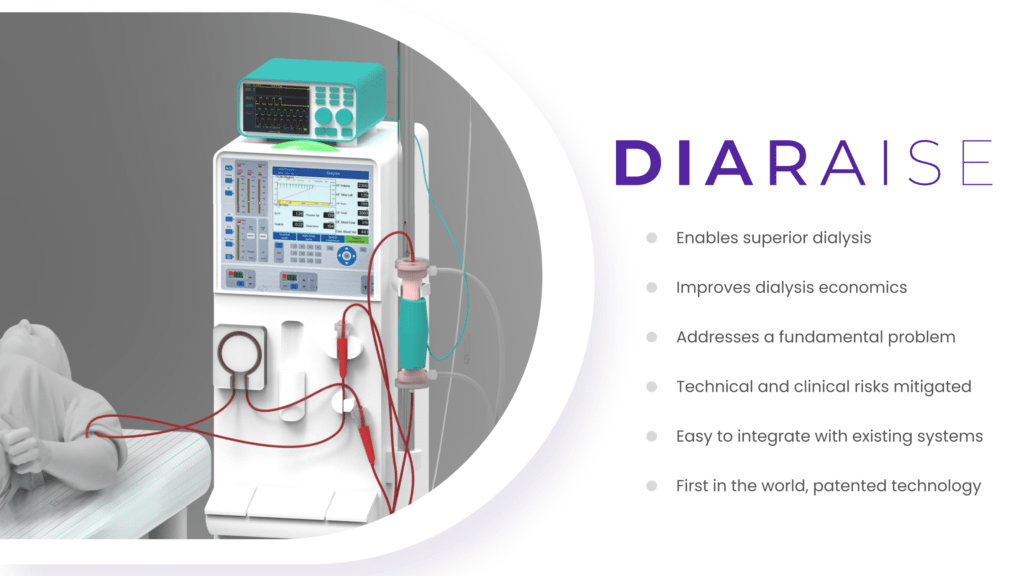
Introducing Diaraise, an innovative dialysis equipment accessory designed to combat intra-dialytic CP. This non-invasive device seamlessly attaches to the dialyzer without direct contact with process fluids and is compatible with all existing dialysis equipment.
In our clinical investigations, Diaraise exhibited remarkable efficacy, with a mean percentage reduction in clearance values of only 4.41% compared to 12.69% in regular sessions (p<0.001). Diaraise effectively dislodges the CP layers, preventing the reduction of pore radius and pore number. Consequently, a larger membrane surface area is available for solute transport, leading to an increased diffusive flux and improvements in session adequacy.
Diaraise was demonstrated to be safe. No significant differences were observed in blood parameters, and no alarms were triggered on the dialysis machine during its application.
This technology is versatile and can be applied across various dialysis modalities, including low-flux, high-flux, hemodiafiltration, and SLED. Particularly in high-flux dialysis, Diaraise has the potential to improve ultrafiltration rates, prevent back-filtration, and facilitate more effective convective solute transport.
Achieving optimal clearance of solutes during a dialysis session remains a major challenge. The incorporation of Diaraise with the dialysis process has demonstrated promising results in mitigating membrane clogging. By enhancing the clearance of solutes, Diaraise can help achieve better quality of life of patients, higher operational efficiency and improved profitability. The implementation of this technology holds the potential to revolutionize dialysis by addressing a critical unmet need in the field of renal care.
FluxPlus
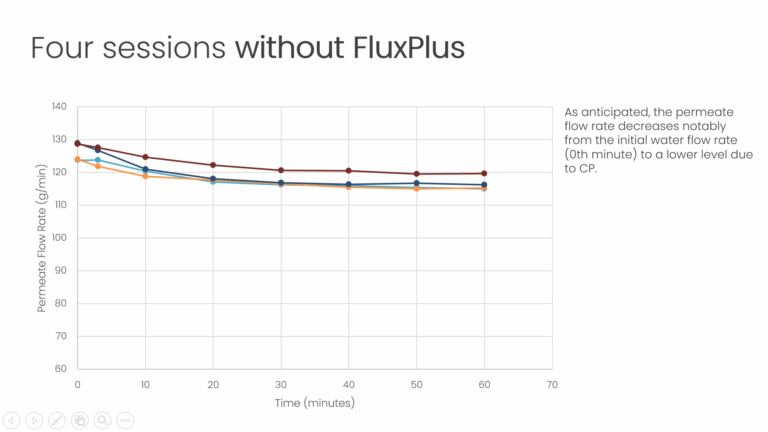
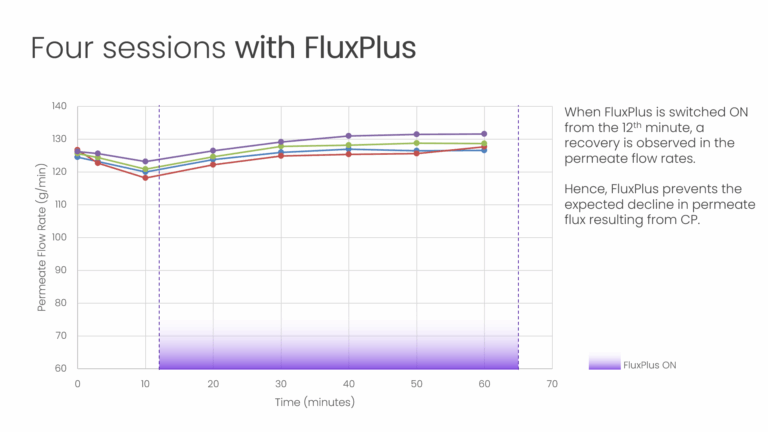
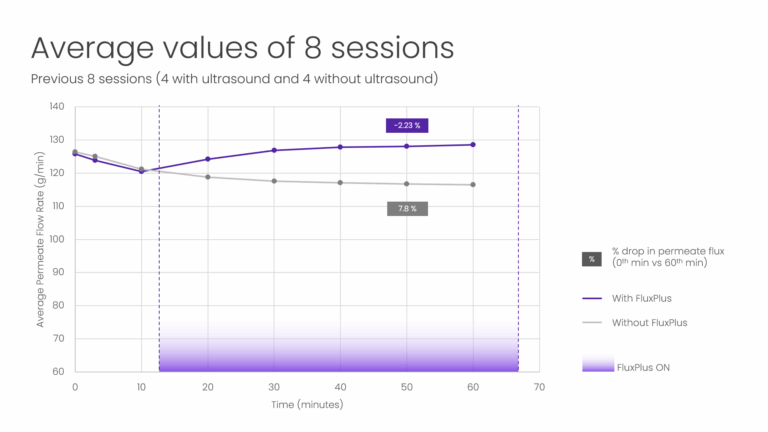
FluxPlus is a variation of Diaraise, customized for processes other than hemodialysis. A clear solution prepared with three solutes of molecular weights 8 kDa, 20 kDa and 40 kDa was passed through filters. Following are the results of the experiment:
References
- National Kidney Foundation. KDOQI clinical practice guideline for hemodialysis adequacy: 2015 update. Am J Kidney Dis. 2015;66(5):884-930
- Eknoyan G, Beck GJ, Cheung AK, et al. Effect of dialysis dose and membrane flux in maintenance hemodialysis (HEMO study). N Engl J Med. 2002;347(25):2010–9.
- Lysaght, M. J. Hemodialysis membranes in transition. Nephrology and Dialysis Updated 1988, 61, 1-17.
- Huang Z, Gao D, Letteri JJ, Clark WR. Blood-membrane interactions during dialysis. Semin Dial. 2009 Nov-Dec;22(6):623-8
- Clark W. R., Gao D., Neri M., & Ronco C. Solute transport in hemodialysis: advances and limitations of current membrane technology. Expanded Hemodialysis 2017, 191, 84-99.
- Gilbert S. J, Weiner D.E., Ing. “Hemodialysis” National Kidney Foundation’s Primer on Kidney Diseases, Edition 6, Elsevier Saunders, pp.508-519
- Morti, S. M., & Zydney, A. L. (1998). Protein-membrane interactions during hemodialysis: effects on solute transport. ASAIO Journal (American Society for Artificial Internal Organs: 1992), 44(4), 319-326.
- Header Image: collection of images from SEM analysis of dialyzer membranes from our study, increasing in magnification from left to right: x22, x450, x10000.
- Fig 2: Daugirdas, J. T., Blake, P. G., & Ing, T. S. (2012). Handbook of Dialysis. Lippincott Williams & Wilkins.